top of page
All Posts
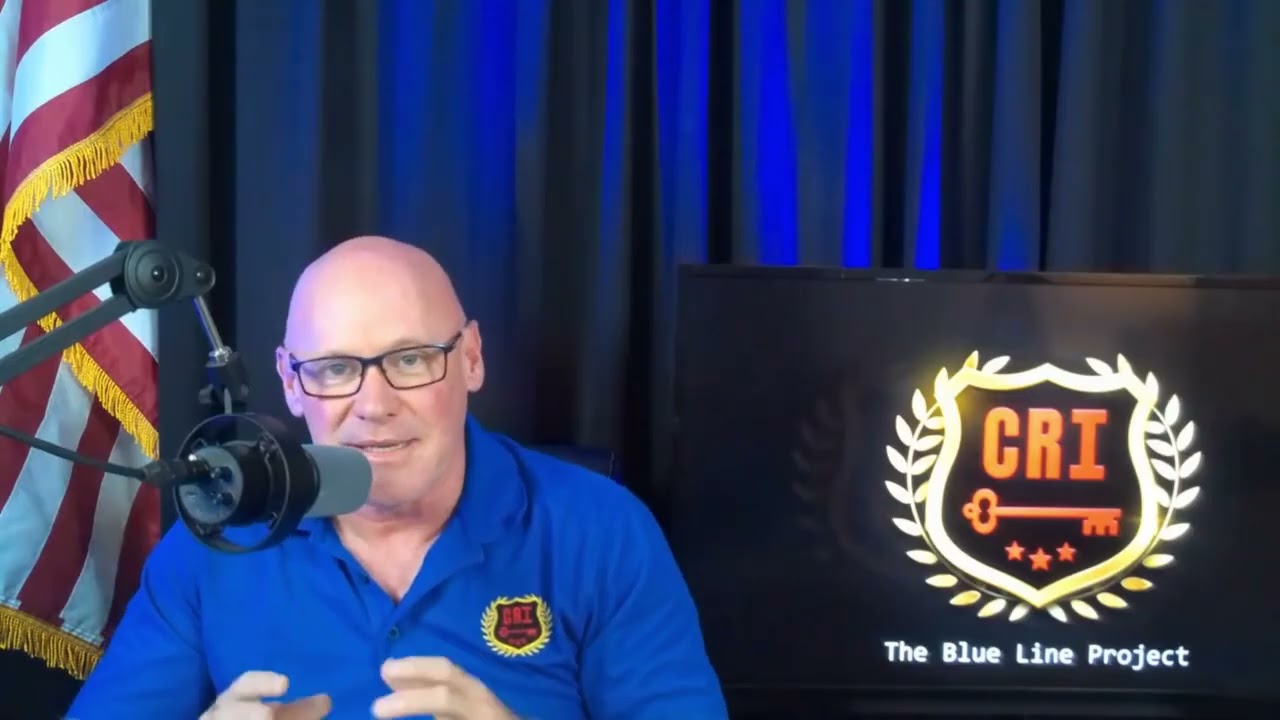
From Call-Taker to Problem-Solver: A Conversation About Crime Prevention That Actually Works
Law enforcement is very good at responding to incidents. But what happens when we begin looking beyond the individual call and asking why the problem keeps happening in the first place? I recently had the opportunity to join John Gabrielson on The Blue Line Project podcast (via The Crime Reduction Institute Network) for a conversation about crime prevention, evidence-based and problem-oriented policing, and how agencies can move beyond simply responding to recurring problems

Michael Burgess
Aug 312 min read


A Failure of Imagination: Before We Can Prevent Differently, We Must Think Differently
Some of the most persistent problems in our communities are not caused by a lack of effort. Officers respond, reports are written, services are provided, arrests are made, complaints are documented, and resources are deployed. People are working hard, often under difficult conditions. Yet the same people, places, behaviors, and circumstances continue producing the same calls, the same victims, and the same harm. Sometimes the problem is not that no one cared or no one tried.
Michael Burgess
Jul 276 min read


Short-Staffed Does Not Mean Powerless: Why Proactive Prevention Cannot Be the First Thing to Go
Staffing shortages are real. Limited budgets are real. Limited resources are real. Across the country, law enforcement agencies of every size are feeling it. Large agencies, small agencies, suburban departments, rural departments, county agencies, and mid-sized departments are all dealing with it in different ways. Some are stretching shifts. Some are relying heavily on overtime. Some are struggling to recruit and retain officers. Some are doing everything they can just to ke
Michael Burgess
Jun 2812 min read


Real Public Safety Belongs to All of Us
“Real public safety begins when we care enough to see harm before it happens — and accept that preventing it belongs to all of us.” This quote reflects much of what I have come to believe through my experience, education, and real-world view of public safety. Too often, when people hear “public safety,” they immediately think of law enforcement. And make no mistake, law enforcement plays an incredibly important and necessary role. Police officers respond to danger, protect vi
Michael Burgess
Jun 152 min read


Before It Becomes the Culture: How Police Leaders Can Stop Toxicity From Spreading Inside the Agency
By Inv./Sgt. Michael S. Burgess, M.S.S. (ret.) Toxicity inside a police agency rarely starts as an official policy problem. More often, it starts in the places leadership does not always see: the squad room, the report room, the parking lot, text threads, ride-alongs, social circles, side conversations, and the quiet moments between calls. It can come from a senior officer who has become cynical. It can come from an FTO who teaches new officers to distrust every initiative be
Michael Burgess
Jun 1312 min read


More Than Response: Building a Realistic Proactive Mindset for Cops
Why evidence-based and problem-oriented policing must be translated into practical, everyday police work Law enforcement has always changed. Sometimes that change happens gradually through leadership, training, experience, and research. Other times, it happens suddenly after a major incident, public pressure, or civil unrest. Either way, the profession has never stayed the same. That does not make change easy. Cops work in a difficult profession. They face danger, uncertainty
Michael Burgess
May 2010 min read


Officer Wellness, Proactive Prevention, and Knowing When to Take Care of Yourself
Officer wellness is not talked about enough. When we talk about proactive crime prevention, we often focus on safer communities, fewer victims, reduced repeat calls, smarter use of resources, and better outcomes for the people we serve. Those things are all important. But there is another part of this conversation that deserves more attention. Every problem prevented is one less crisis someone has to respond to. Every victimization prevented is one less trauma for a victim, a
Michael Burgess
May 125 min read


SARA + R.E.A.L.: A Practical Framework for Real-World Problem Solving
Have you ever wished there was a simpler way to understand the SARA model and quickly assess whether a planned response is realistic, practical, and workable in the real world? That is the purpose of this simple SARA + R.E.A.L. visual reference. The SARA model provides a step-by-step problem-solving process: Scan — What is the problem? Analyze — Why is it happening? Where is it happening? When is it happening? Who is involved or affected? Respond — What should we do to addres
Michael Burgess
May 81 min read


Beyond the Call: Breaking the Cycle of Repeat Domestic Violence Calls
A practical, proactive approach for law enforcement and key partners If you have worked patrol, investigations, supervision, dispatch, crime analysis, prosecution, victim advocacy, or any other role connected to domestic violence response, you know the pattern. The address comes out over the radio and you recognize it before the dispatcher finishes the update. Same house. Same people. Same situation. The responding officers already have a sense of what they may be walking int
Michael Burgess
Apr 3026 min read


Are you doing your part?
No one wants to live in a place where they feel on edge, where they second‑guess a walk to the car, or worry about the people they love just getting through the day. We all want the same basic things: to see our kids grow up, to come home from work, to enjoy our neighborhoods without constantly looking over our shoulder. That feeling of safety is not about statistics or headlines; it is about what it’s like to live everyday life on your street, in your building, in your town.
Michael Burgess
Apr 212 min read


Youth Crime Is Real. So Is the Frustration. And So Are the Options.
Practical, evidence‑informed steps for law enforcement and partners The frustration is real. The same youth keep showing up. The same places keep generating problems. The same stolen cars, the same masks, the same group behavior, the same repeat calls. In some communities, it is youth violence. In others, it is robberies, stolen vehicles, assaults, weapons, or ongoing group conflicts. In many places, it is not just one incident or one “bad kid.” It is a repeating pattern invo
Michael Burgess
Apr 2019 min read


AI as a Force Multiplier
Practical, Realistic Uses of AI to Support Proactive Crime Prevention Artificial intelligence is a growing part of modern policing and public safety operations. As its role expands, it must be governed, tested, monitored, and used in ways that protect both public safety and public trust. Current guidance from IACP, NIST, NIJ, and the Council on Criminal Justice reflects that same basic idea: AI may offer real value, but it should be introduced carefully, evaluated honestly, a
Michael Burgess
Apr 1117 min read


Colleges & Universities: An Untapped Partner in Proactive Crime Prevention
Do you a college or university near your jurisdiction? If so, you may have one of the most overlooked partners in proactive crime prevention sitting just down the road. When people think about key partners in crime prevention, they often think of other justice-system partners, community organizations, schools, service providers, or local government. All of those matter. But colleges and universities can also play an important role, and too often, they are overlooked. Th
Michael Burgess
Apr 63 min read


Making Violent Crime Reduction Grants Work in the Real World
Violent crime grants should fund more than “stuff.” They should fund clear, focused strategies that agencies can actually run in the real world.
This article shares a simple way to move from “we have a violence problem” to a concrete problem picture, a SARA based playbook, and a plan that uses technology and partners realistically.
Whether you’re writing grants or leading strategy, I hope this mindset is helpful.
Michael Burgess
Apr 38 min read


Introducing the Practical Proactive Policing Framework: A Practical and Realistic Bridge Between Good Ideas and Real-World Practice
For years, law enforcement has been told to “be proactive.” The problem is that the phrase is often used without enough clarity behind it. Sometimes it gets interpreted as making more stops, writing more tickets, making more arrests, or simply doing more visible enforcement. Other times, it is used as a general expectation without any real explanation of what proactive policing is supposed to look like in practice. Officers hear it. Supervisors repeat it. Agencies talk ab
Michael Burgess
Mar 2415 min read


Proactive Crime Prevention Takes More Than Law Enforcement
When people hear the phrase proactive crime prevention , they often think of police officers, investigators, supervisors, and crime reduction units. That makes sense. Law enforcement plays a primary and highly visible role in responding to crime, investigating offenses, enforcing the law, and helping protect the community. But if we are being honest about what it really takes to address, deter, and prevent recurring crime problems , law enforcement cannot do it alone. In fact
Michael Burgess
Mar 206 min read


Book: The Comprehensive Field Guide to Proactive Crime Prevention
I’m excited to share that my newest book, The Comprehensive Field Guide to Proactive Crime Prevention , is now available on Amazon in print and e-book. This is not a typical academic book. It is a practical, real-world field guide designed to help law enforcement and public safety professionals think through recurring crime and community problems in a way that is realistic, proactive, and easy to understand. The goal of this book is to help readers move beyond simply reacting
Michael Burgess
Mar 141 min read


PPS Reflection / Opportunities
“Great moments are born from great opportunity.” — Herb Brooks, Miracle That line may have been delivered in the context of hockey, but it speaks just as powerfully to the future of policing. Law enforcement has a great opportunity right now. An opportunity to move beyond simply answering call after call, taking report after report, and repeating the same cycle without ever getting ahead of the problem. An opportunity to think differently. To ask better questions: Who is invo
Michael Burgess
Mar 21 min read


From Call Taker to Problem Solver: Reinforcing What Proactive Really Means
“Be proactive” is one of the most common phrases in policing — and one of the most misunderstood. In too many agencies, proactive becomes shorthand for more stops, more tickets, more arrests, and higher activity counts. The problem is: activity isn’t the same as impact. You can stay busy all shift and still return tomorrow to the same addresses, the same people, and the same problems. That’s why I wrote my recent Police1 article — to help put proactive policing into plain lan
Michael Burgess
Feb 182 min read


PPS Reflection | Proactive Prevention Requires Community Partnership
Police can enforce the law — but communities can help prevent the next incident. I believe in community policing — when it’s done right. When officers genuinely care about the communities they serve, when they show up consistently, follow through, and have a stake in what happens beyond the call for service, relationships form. Rapport builds. Trust grows. And prevention becomes possible. But there’s an uncomfortable reality many officers have experienced firsthand: W
Michael Burgess
Feb 64 min read
bottom of page